I was born in Romania on 29 June 1961. My legal name is Marcello-Silvestri Chelba, but I publish under the name Marcel Chelba.
I have lived with my family in Tübingen, Germany, since 2014. We have been German citizens since 2021.
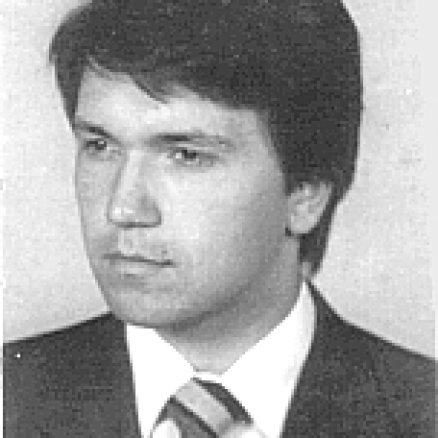
Education and Early Philosophical Development
My philosophical interests began very early. By the age of fifteen I was reading Hegel, and by the end of secondary school philosophy had become my principal intellectual interest.
Nevertheless, I deliberately chose not to study philosophy at university. In communist Romania in the early 1980s, academic philosophy was strongly constrained by ideology. I decided instead to study physics, believing that a rigorous education in a fundamental science would provide a firmer basis for philosophical research.
In this sense, I chose physics largely for philosophical reasons.
Before university, I spent two years at an art school and subsequently completed technical secondary education, with particular interests in mathematics and physics. In 1986, I graduated from the Faculty of Physics at the University of Timișoara.
My graduation thesis was entitled:
Modeling in Physics and its Epistemological Significance (1986).
The question underlying that work—How is scientific knowledge possible?—has remained one of the central questions of my philosophical research.
My early work was strongly influenced by Hegel. Among my lectures and papers from this period were:
1986 — University of Timișoara: The Idea of Negativity in Hegel’s Logic
1986 — University of Iași: The Negativity of Predication in Hegel’s Logic
1989 — Suceava: Hegel and Modern Physics
1989 — Suceava: The Aesthetics of Life or Life as a Work of Art
My investigations into Hegel, logic, aesthetics, and the foundations of physics eventually led me increasingly towards Kant.
Kantian Studies
I subsequently undertook doctoral research in philosophy, but ultimately decided not to submit a dissertation for formal examination.
Instead, in 2004, I published the introductory part of this research:
Marcel Chelba, Introducere critică. Despre posibilitatea metafizicii ca știință în perspectiva filosofiei critice kantiene, Crates, 2004.
[Critical Introduction: On the Possibility of Metaphysics as Science from the Perspective of Kantian Critical Philosophy — not yet translated into English.]
The book marked a decisive stage in my philosophical development. It formulated a thesis that would become central to my subsequent work: that developments in modern science should be reconsidered in relation to Kantian epistemology, and particularly to the Transcendental Aesthetic.
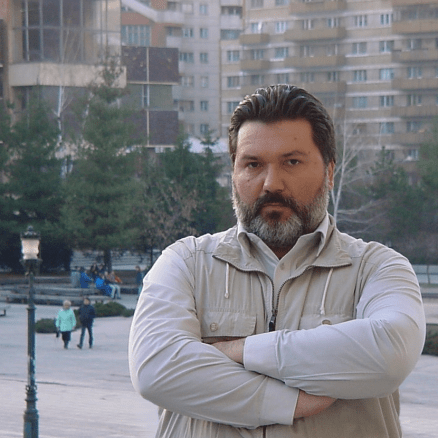
My research has continued independently since then, concentrating primarily on Kantian critical philosophy, epistemology, logic, the philosophical foundations of physics, aesthetics, and the relation between scientific and philosophical knowledge.
Alongside this work, my professional life has included work as a physics teacher, librarian, graphic designer, and entrepreneur. For approximately two decades I founded and managed my own advertising and graphic-production company in Romania.
Throughout these different professional activities, philosophical research remained the continuous thread of my intellectual life.
Recent Work
My more recent publications have returned to the problems first formulated in my earlier work while considerably expanding their scope.
Among them are:
Open Letters to Iain McGilchrist—First Letter: On Iain McGilchrist’s Implicit Physiological Confirmation of Kantian Stereoperspectival Epistemology, 2026, Second Edition. (This blog contains a sample chapter)
Preliminaries for a Pure Epistemological Interpretation of the Antinomy of Pure Reason, 2026, Second Edition (This blog contains a sample chapter)
On the Certainty of Uncertainty and Kantian Stereoperspectival Epistemology, 2025, Second Edition
These works develop, from different perspectives, the philosophical programme that I now call Stereoperspectival Epistemology.
They investigate the relation between Kantian transcendental philosophy and modern developments in logic, physics, neuroscience, cybernetics, and the study of hemispheric asymmetry, as well as the wider consequences of these relations for epistemology and metaphysics.
The detailed philosophical argument, however, belongs to the works themselves and to the Kantinomus Project. This short CV is intended only to indicate the intellectual path by which I arrived at that programme.
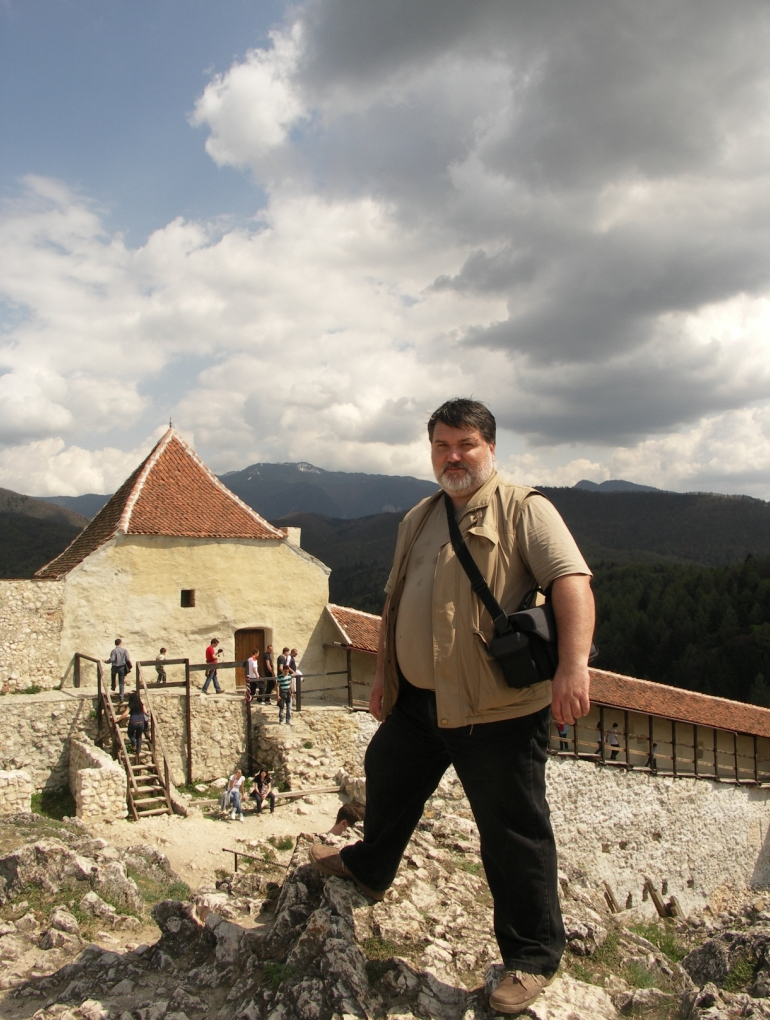
Kantinomus
I founded Kantinomus as an independent platform for publishing and developing the results of my philosophical research.
The project brings together work extending over more than four decades, from my early studies of Hegel, aesthetics, and the epistemology of physics to my present work on Kant and Stereoperspectival Epistemology.
Throughout this development, one question has remained remarkably constant:
How is knowledge possible, and what is the relation between the different perspectives through which reality becomes intelligible to us?
Much of what I have written since 1986 can be understood as an attempt to answer that question.
The philosophical aims and theoretical foundations of this research are presented in The Kantinomus Project.
My books, essays, and other philosophical writings can be found here:
Marcel Chelba
Tübingen, Germany

